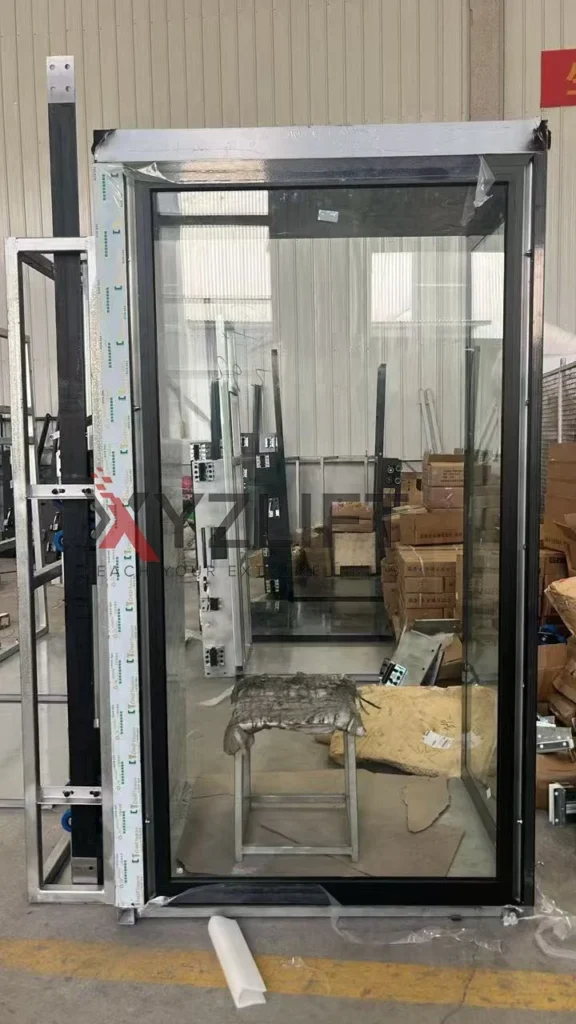
In November of this year, we received an elevator inquiry from Singapore for a three-story building with a central staircase installation. We currently have several hydraulic elevator projects in Singapore that have obtained PE certification, and hydraulic elevators meet Singapore’s elevator installation standards. Therefore, we directly recommended a hydraulic elevator to our client.
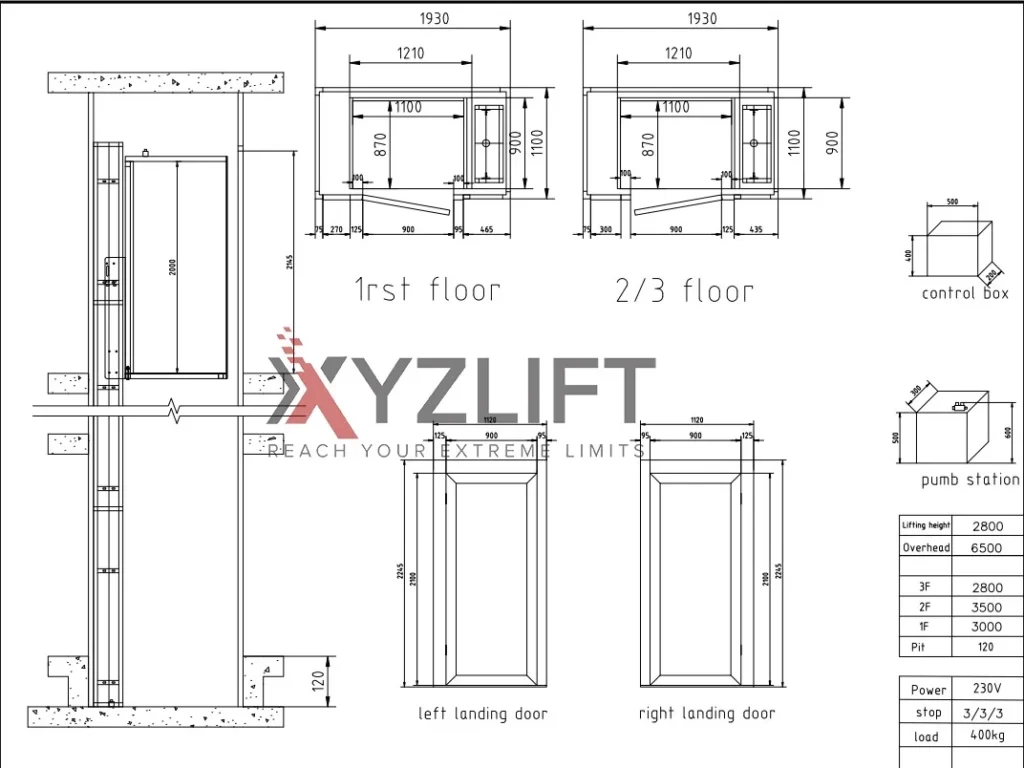
Singapore requires certification, so we had our installation agent contact the client. The agent went to the site to take measurements. Based on the measurements, we provided the following preliminary drawings:
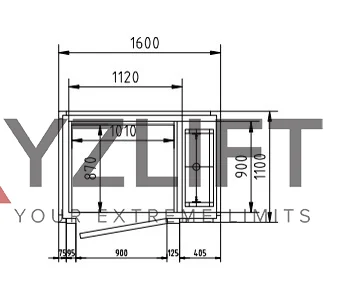
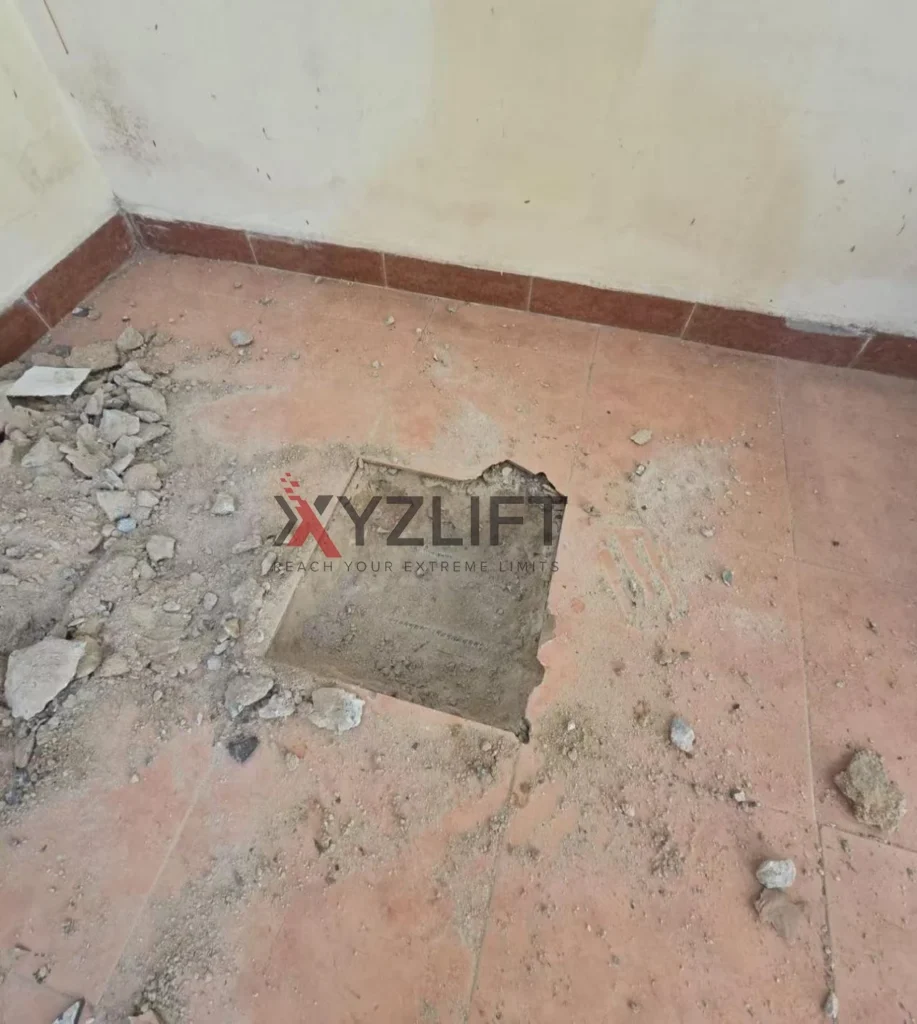
Regarding the foundation pit issue, the client wants our elevator platform to be flush with the ground, thus requiring a foundation pit for installation. Our standard recommended pit depth is 150mm, which includes a safety buffer distance. However, the client’s flooring is already installed, necessitating demolition and the excavation of a pit. Therefore, they prefer a smaller pit. Our elevators have a safety touch panel at the bottom, which automatically stops upon detecting a collision. This is a crucial safety feature and cannot be removed. Therefore, while retaining the safety touch panel, we have specified a minimum pit depth of 120mm.
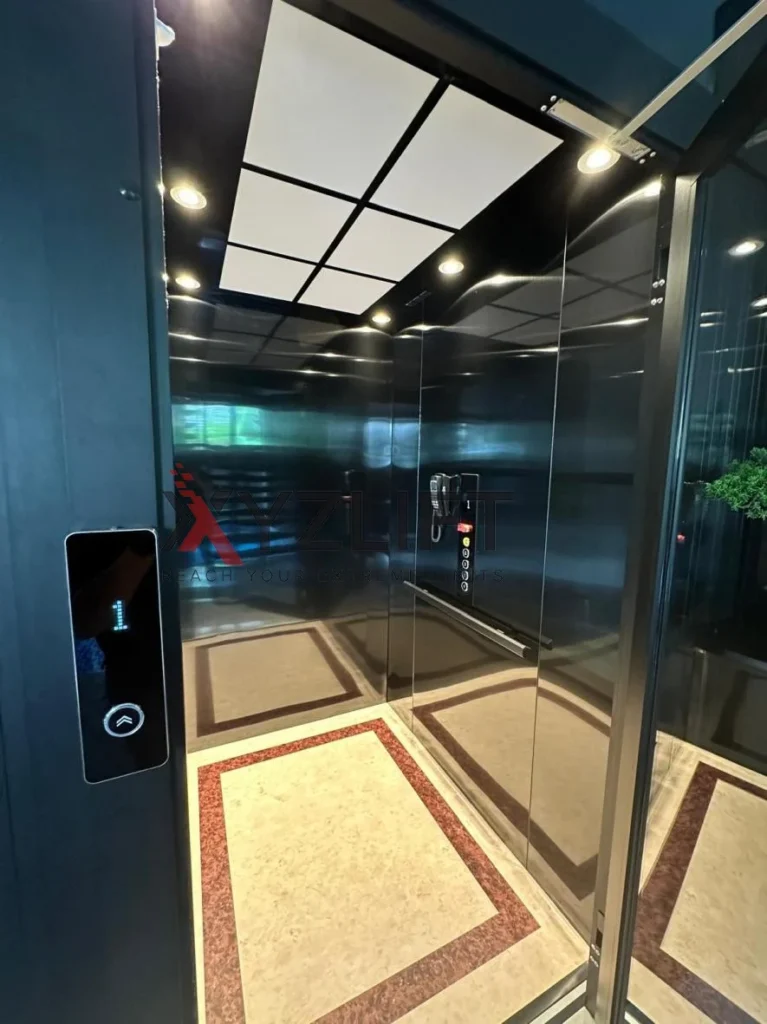
The client choose a black cabin style, similar to our previous projects in Singapore, as shown in the image below. We recommended pairing it with black rail panels for a better visual effect.
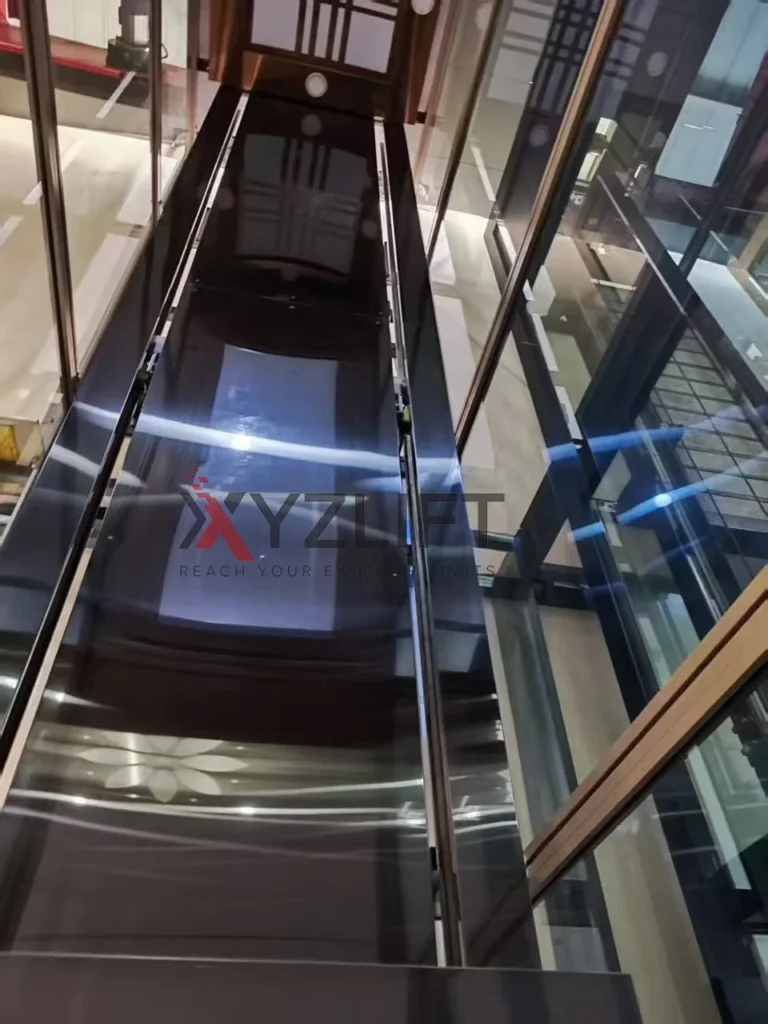
Based on the client’s requirements, the technical team provided the following animation simulation effect:

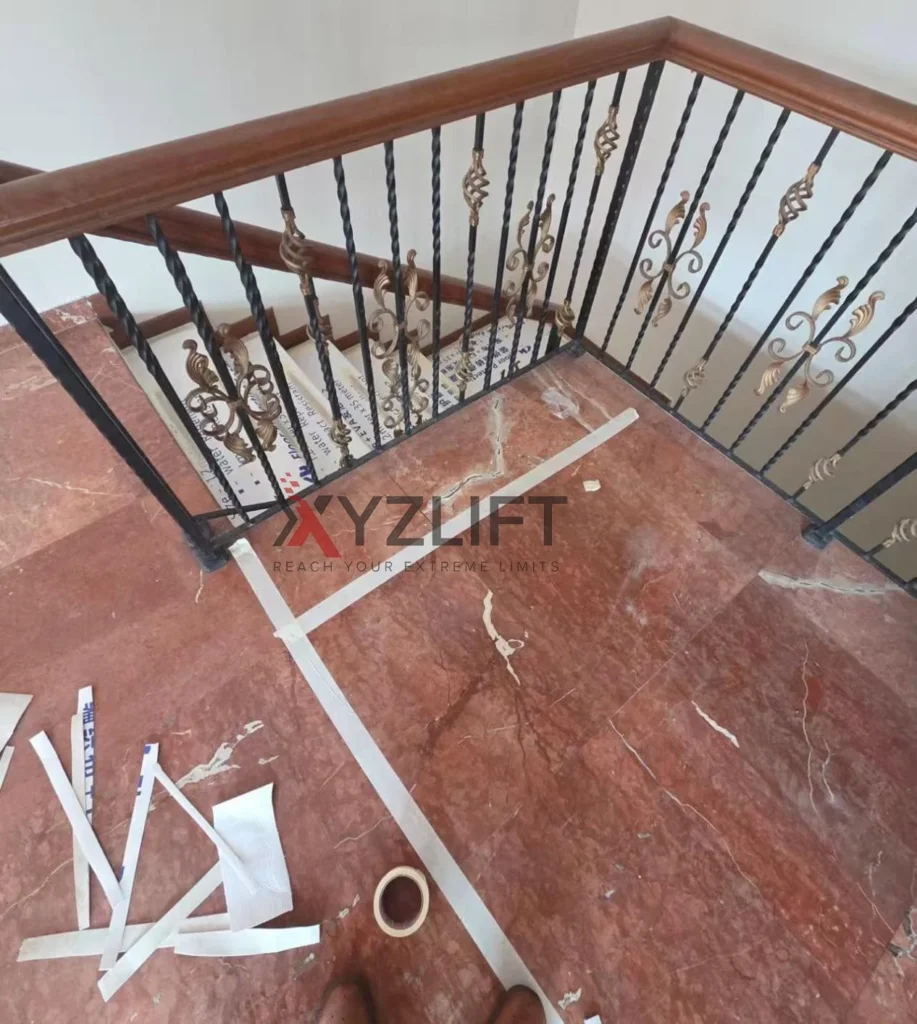
The client is installing the elevator in the middle of the staircase, with an installation space of 1930mm. However, the elevator itself is only 1690mm wide, leaving a 240mm gap that is extremely dangerous. Therefore, our solution is to make the shaft width 1930mm. Due to the size limitations of hydraulic elevators, 1690mm is the maximum internal installation size. This means there will be some empty space within the shaft, but the entire shaft is enclosed, ensuring complete safety for the installation in the middle of the staircase.
Final drawing as below:
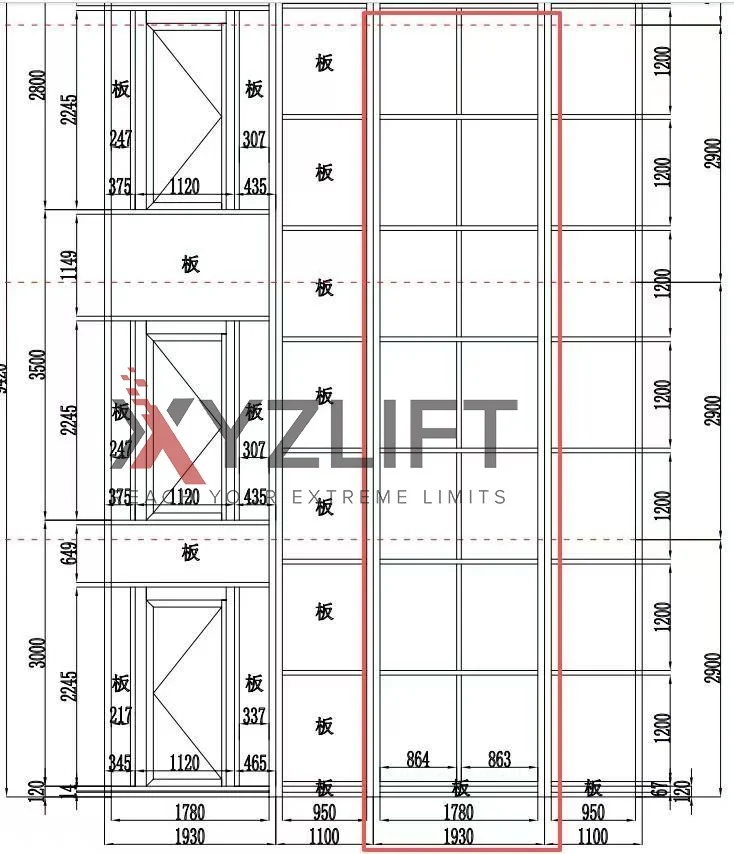
Considering the shaft width of 1930mm, the rear shaft glass, if a single piece, would be 1.9 meters wide, making installation difficult. Therefore, our technical team proposed adding a horizontal brace in the middle to divide the glass into two pieces.
Production completed, photos of the car test run are as follows: